openBIS Storage
There are different types of storage in openBIS:
- Active data is stored on ETH NAS.
- Passive data is stored on long-term tape storage.
- Data retrieved from passive storage is copied to scratch storage and remains on tape.
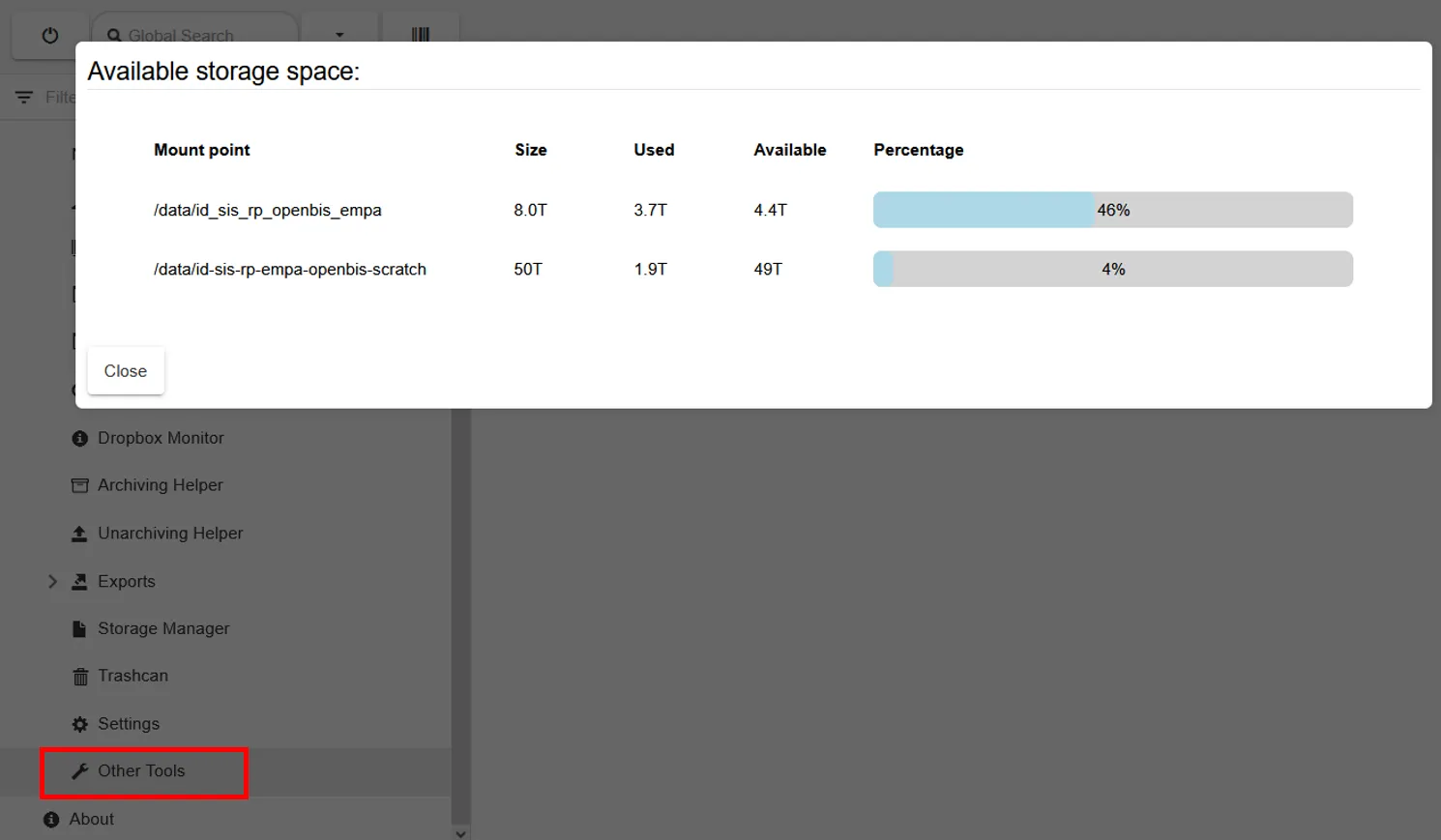
The overall data storage can be seen under Utilities > Other Tools > Show available storage space. This shows two different paths:
- /data/id_sis_rp_openbis_empa: Active storage on openBIS
- /data/id-sis-rp-empa-openbis-scratch: Scratch storage
Active Storage on openBIS
Section titled “Active Storage on openBIS”Active storage can also be referred to as short-term storage. It is intended for actively used data, such as data from ongoing projects or similar. The total active storage capacity across all openBIS instances at Empa is currently 30 TB. This capacity can be increased if necessary, but please note that extra storage space comes at an additional cost. Once a project or similar activity has been completed, the datasets should be moved to passive storage to free up space in active storage.
Key features:
- Data is backed up through daily NAS snapshots retained for 6 days and tape backups retained for 90 days.
- Data is immutable.
- Data can be accessed through the ELN interface, using the Export options, via pyBIS, or via SFTP.
More will be available once openBIS 7 will be rolled out at Empa, with openBIS drive and AFS server. Click here for more info.
Passive Storage on openBIS
Section titled “Passive Storage on openBIS”There are different ways to move data from active to passive storage in openBIS. You can archive datasets directly in openBIS by following the Archiving Datasets documentation. Alternatively, you can upload your dataset using the Empa Archiving Dataset Type. Data moved to passive storage is stored on tape at ETH Zurich and no longer counts towards the active storage capacity in openBIS. Data retrieved from long-term storage is copied to the openBIS scratch storage but remains on tape. The scratch storage provides 50 TB of storage shared across Empa. When the storage reaches capacity, the oldest files are automatically deleted to free up space.
Key features:
- Data is stored on georedundant tape systems at ETH Zürich.
- Data is retained for at least 10 years.
- Data can be unarchived at any time.
- Datasets that are unarchived will be automatically queued and is usually available within minutes to hours.
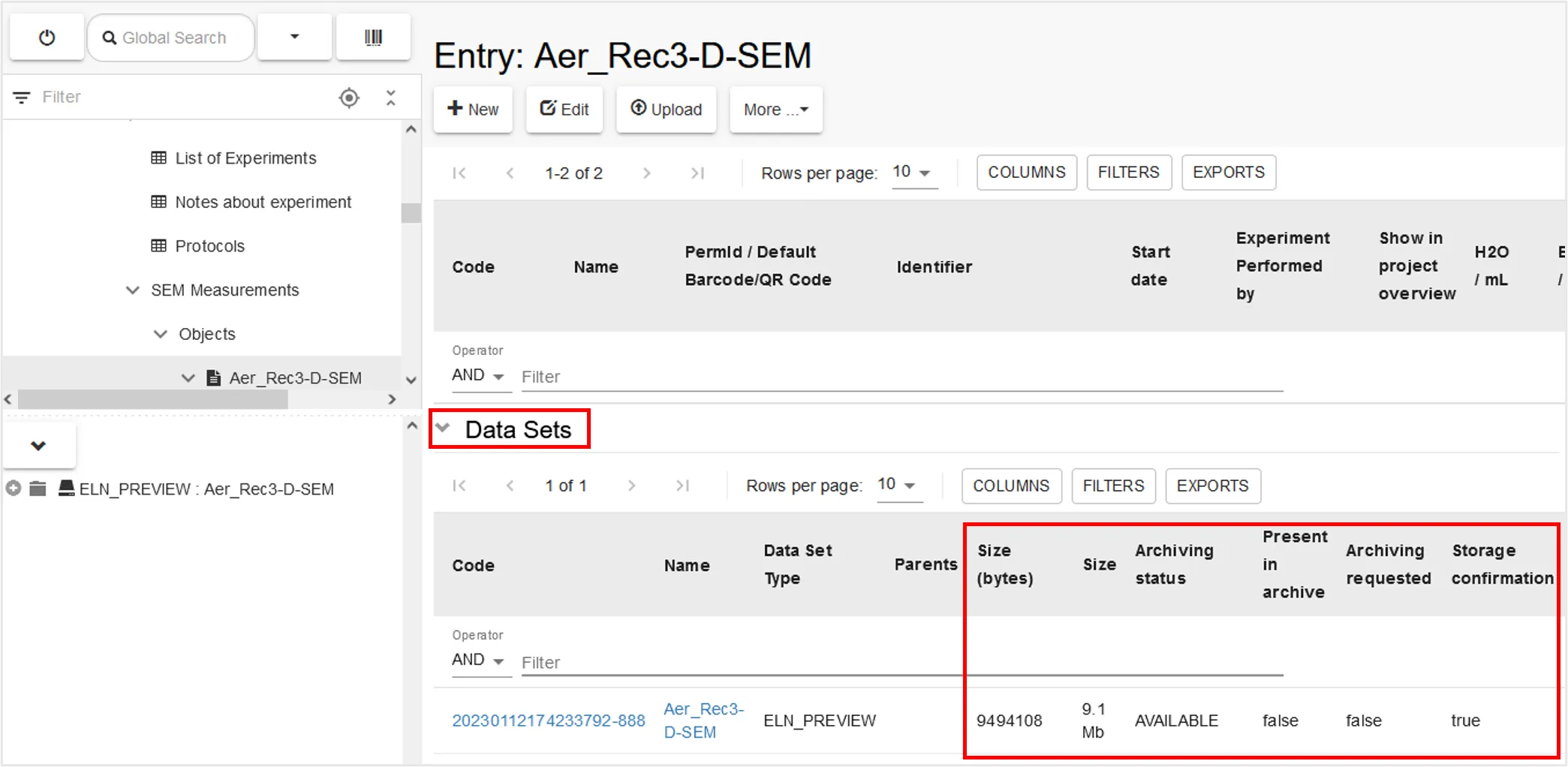
Datasets in openBIS
Section titled “Datasets in openBIS”Datasets can either be attached to Collections/Default Experiments or to Objects.
(Via ELN interface or via Empa-Dropbox mechanism).
To check the Datasets, the respecting openBIS-entity needs to be opened and when scrolled further down, there is the section for Datasets.
In the displayed table, all the information is available, like the archive status and the size.